
In The Lens of Southeast Asia: Sleeping With The Enemy
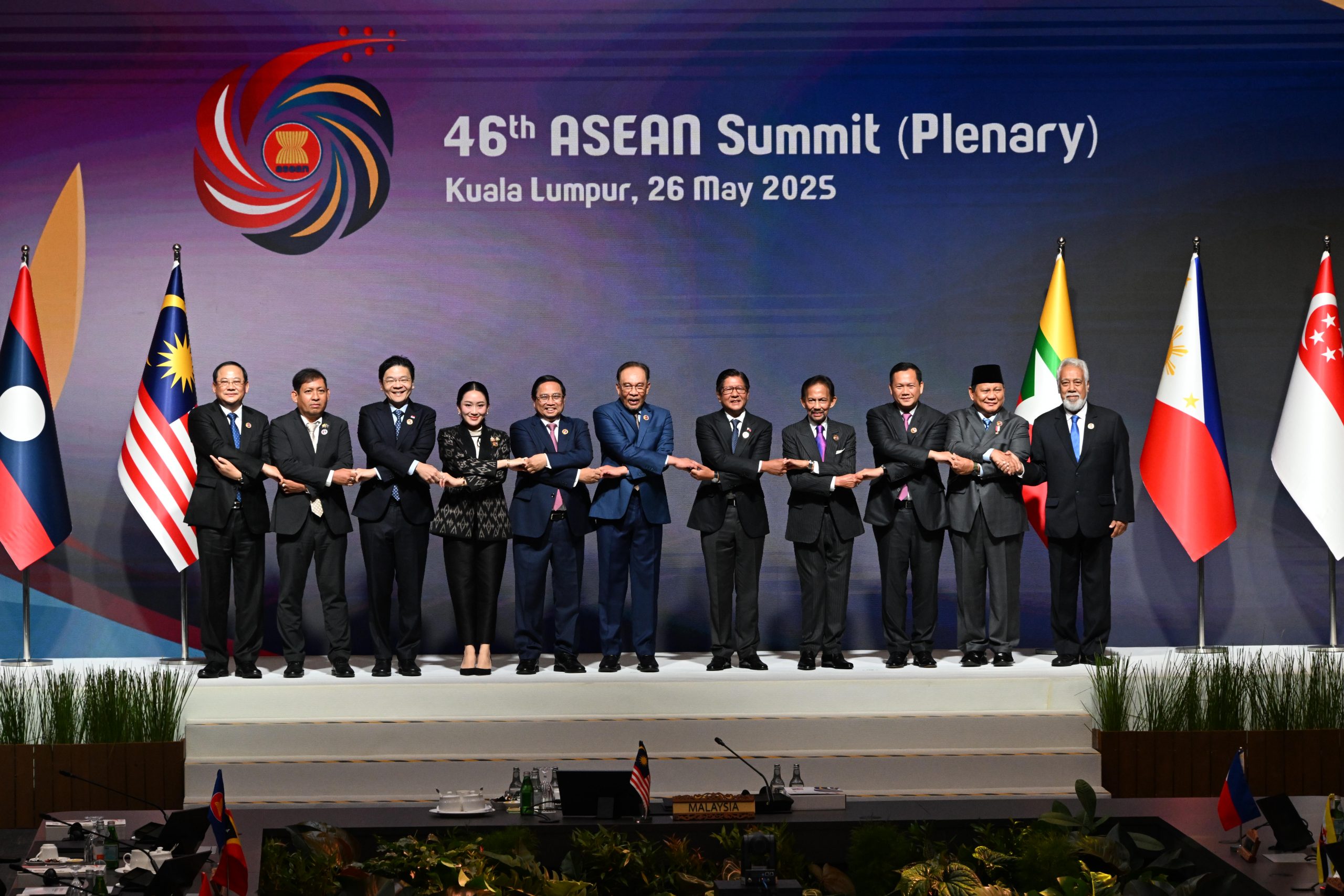
The popular narrative in Southeast Asia is one of firm and unquestioning solidarity with Palestine. But while public sentiment remains vocal, regional defense planners and tech sectors operate under a very different logic. Israel’s presence in Southeast Asia was never built on public diplomacy; it was secured through quiet, indispensable partnerships in cybersecurity, intelligence and defense modernization. To see how this influence persists despite widespread public opposition, one must examine the divergent paths of Singapore and Malaysia, alongside the structural passivity of ASEAN itself.
Non-Interference
Whenever atrocities in Gaza dominate global headlines, the public inevitably demands a unified regional response. People ask why the Association of Southeast Asian Nations (ASEAN) seems so utterly paralyzed. The answer isn't just a lack of political willpower; it is a structural flaw built into the DNA of the bloc.
ASEAN prides itself on “ASEAN Centrality”, the idea that the region moves as one cohesive, strategic bloc to maintain peace and dictate its own terms to global superpowers. But the engine keeping this bloc together is the strict principle of non-interference established during the Cold War. The strict principle includes — you do not meddle in your neighbor's domestic affairs and they do not meddle in yours.
While this principle prevented Southeast Asia from tearing itself apart in the 1970s, it has inadvertently been weaponized today and to be fair keep the region together as well. By strictly ignoring the bilateral defense, intelligence and tech deals of its neighbors, ASEAN has created a highly porous landscape. It allows a foreign power like Israel to pick off nations one by one, securing lucrative contracts and intelligence footholds without ever facing a unified regional pushback.
Singapore
Israel recognized this structural loophole early on through its Periphery Doctrine, a survival strategy to leapfrog hostile Arab neighbors and build alliances in Asia. Because ASEAN nations prioritize sovereign development and regime survival over regional ideological alignment, Israel simply had to offer what these developing nations desperately needed.
No country illustrates this better than Singapore. When the island nation was suddenly separated from Malaysia in 1965, it felt incredibly vulnerable. Surrounded by larger Muslim-majority countries and lacking a military apparatus, Singapore was desperate for survival.
Enter Israel. Disguised as “Mexicans” to avoid alarming neighboring Malaysia and Indonesia, advisors from the Israel Occupied Forces (IDF) secretly arrived to build the Singapore Armed Forces (SAF) from the ground up. ASEAN’s non-interference policy meant nobody intervened and no regional summit was called to question the arrival of foreign military architects.
That initial desperation forged a rock-solid defense alliance. Singapore didn't just buy weapons; it intertwined its entire defense ecosystem with Israel. Today, Singapore remains Israel's crown jewel in the East, a permanent, highly secure anchor right in the heart of maritime Southeast Asia. Under the banner of ASEAN Centrality, a foreign intelligence and military footprint was permanently embedded into the region and member states simply looked the other way.
Malaysia
On the opposite end of the spectrum sits Malaysia, a nation that strictly refuses any normalization, formal trade or diplomatic ties with Israel. For policymakers in Putrajaya, maintaining a hardline stance against the occupation isn't just about moral solidarity; it is a fundamental requirement for political survival.
Malaysia operates under the assumption that its ideological walls keep it safe. But in modern geopolitics, the threat isn't always a direct bilateral trade deal. Sometimes, the threat walks right through the front door, disguised as innovation.
Look no further than the recent controversy surrounding the Network School in Forest City, Johor. Launched in 2024 by a prominent tech investor, the commune was marketed as a utopian co-living hub for tech entrepreneurs. Yet, by mid-2026, the project was unceremoniously shut down by local authorities following explosive allegations that Israeli nationals were living and operating within the compound using second-country passports to bypass Malaysia’s strict immigration ban.
The Forest City incident is a chilling wake-up call. It proves that ideological fortresses are easily bypassed by dual-citizenship loopholes and the allure of foreign tech investments.
Beyond physical infiltration, the risk of indirect exposure remains massive. Israeli embassies operate freely in neighboring Singapore, Thailand and the Philippines, meaning their intelligence networks are practically next door. Furthermore, when Malaysian forces conduct joint military exercises with strategic partners like India, a country heavily dependent on Israeli military sub-systems they inadvertently open a window. It creates a potential blind spot for Israeli defense contractors to study regional electronic warfare capabilities and combat tactics. Malaysia might keep the main gate locked but the digital and regional backdoors are wide open.
Conclusion
The modern Trojan horse wears a fancy business suit.
As digital economies boom, the region is desperate for cybersecurity and agricultural technology. When a nation contracts Israeli private intelligence firms, bringing to mind the infamous Pegasus spyware that has cast dark shadows over the digital privacy of several ASEAN states the entanglement becomes civilian, not just military.
By embedding itself into the critical infrastructure and tech sectors of developing nations, Israel ensures that cutting diplomatic ties is no longer just a political statement. For these nations, unraveling these technological ties would be economic suicide.
Every time a crisis erupts in the Middle East, Southeast Asia falls back on the comforting illusion of ASEAN Centrality. But a bloc cannot be central or unified when its members are quietly sleeping with the enemy to secure their own technological and military futures.